
The Brown County Homeless and Housing Coalition traces its roots back to the early 1980s, when community leaders began to recognize the growing needs of individuals displaced by efforts to revitalize downtown Green Bay. As older, low-cost housing was removed, many residents were left without stable housing options.
01
The Beginning
As the number of people experiencing homelessness began to increase, concerned service providers came together to better understand the issue and advocate for solutions. This collaboration led to the formation of the Brown County Task Force for the Homeless, an effort led by St. Norbert College Professor, Karina O’Malley, and its first president, Lee Meyers. Early partners included the Brown County Hunger Task Force, The United Amerindian Center, The Salvation Army, St. Vincent de Paul, and Marion House. Together, they worked to raise awareness and address urgent shelter needs.
For O’Malley and her husband, Lou, these efforts became deeply personal. From 1990 to 2002, they opened their residence to individuals and families experiencing homelessness, creating what became known as ‘Crossroads.’
02
Early Advocacy & Development
The early days of the Task Force focused on educating City and County leaders about the impact of gentrification and the needs of those displaced. Public forums, presentations, and coverage in the local media were common, and for the first time, data was being gathered on those seeking shelter in the community.
As awareness grew, the work of the Task Force began to expand beyond education and advocacy into ongoing coordination with local service providers and county leaders. What started as an informal effort to respond to immediate needs gradually developed into a more sustained community network that became formalized as the Brown County Homeless and Housing Coalition.
03
Projects
Through partnership, advocacy, and shared commitment, several key programs and resources were created—many of which continue to serve Brown County today.
- Ecumenical Partnership for Housing and Freedom House - In 1992, the Task Force helped spark the creation of the Ecumenical Partnership for Housing and Freedom House programs, expanding support for the increasing number of families with children in need of stable housing.
- New Community Clinic - Building on the NEW Community Clinic’s existing efforts, the Task Force supported the development of a federally funded Healthcare for the Homeless program, helping ensure individuals experiencing homelessness could access essential medical care.
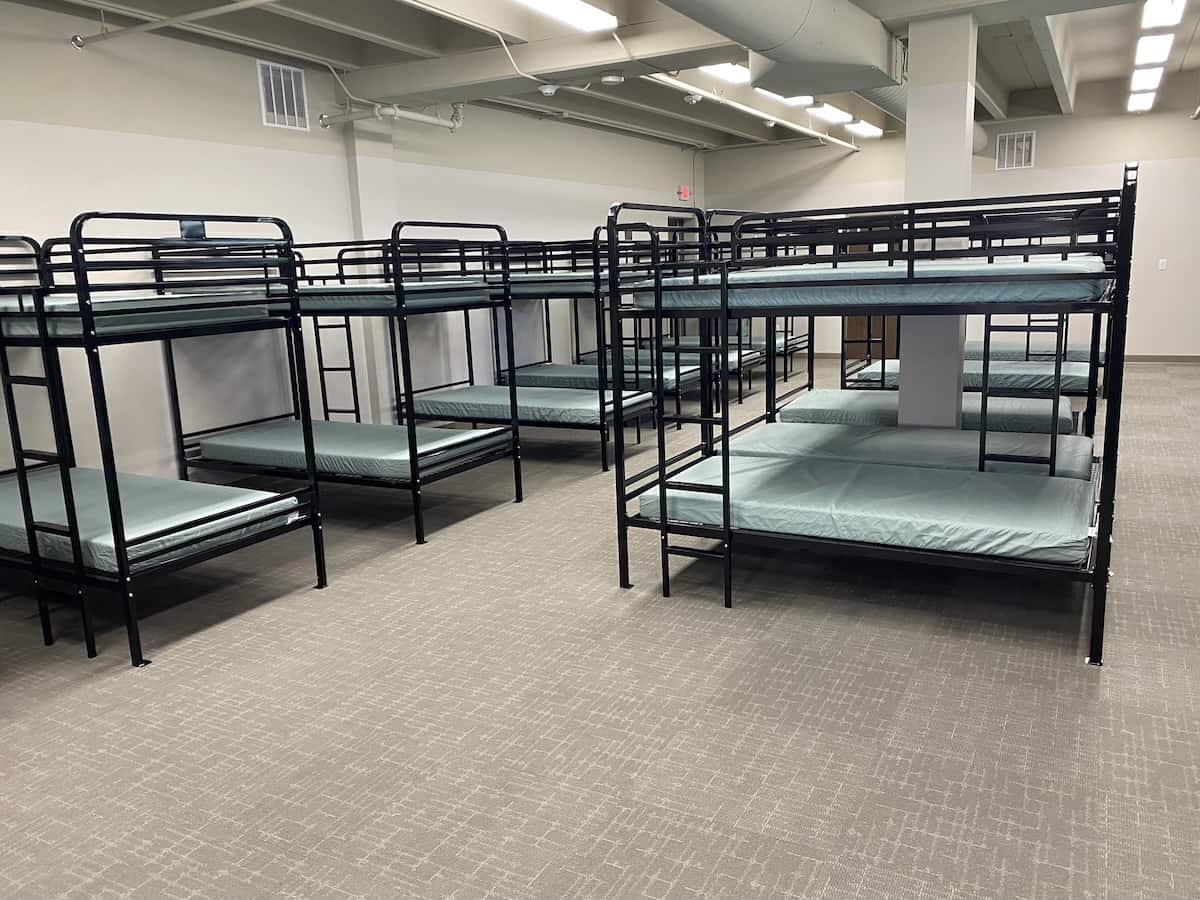
- New Community Shelter - In partnership with the Brown County Clergy Association, the Task Force helped establish New Community Shelter, which opened in 1994 to serve adults without children and provide meals to the broader community.
- St. John’s Shelter - In the early 2000s, the Coalition led efforts to address gaps in winter shelter. This work contributed to the creation of the St. John the Evangelist Homeless Shelter, providing seasonal overnight shelter and critical support services for individuals with no other options.
04
Today
The Brown County Homeless and Housing Coalition continues to grow in both partnerships and service, grounded in a shared commitment to supporting individuals and families experiencing homelessness.
Today, this work is guided by the Greater Green Bay Blueprint to Prevent and End Homelessness, which provides a shared direction for how partners collaborate, prioritize efforts, and work toward long-term, sustainable solutions.